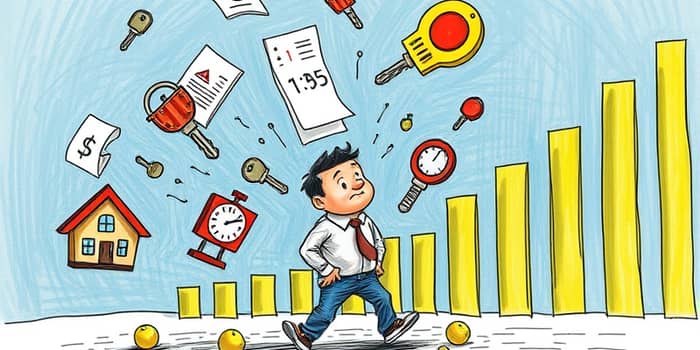
Most people think of credit scores merely as a gatekeeper for loans. In reality, a low score seeps into every corner of life, silently inflating costs, limiting opportunities, and triggering stress. Understanding these unseen consequences can empower you to take control and reclaim financial freedom.
Understanding Credit Scores and Their Impact
Credit scores—most commonly FICO and VantageScore—range from “Bad” (600 and under) to “Excellent” (750 and above). This three-digit number influences more than just your borrowing costs; it dictates whether you can rent an apartment, secure a job, or pay fair insurance rates.
Even a “Fair” score of 650–699 can carry steep penalties. Studies show a fair credit score can cost individuals an extra lifetime interest payments of $39,000+ versus someone with “Good” credit. Over a decade, a subprime borrower may pay $63,480 more in interest alone on typical loans and insurance.
This single mortgage example—on a $200,000 loan over 30 years—illustrates how higher rates can snowball into tens of thousands of dollars beyond your principal. Auto loans follow suit: subprime buyers often face rates near 11.86%, translating to nearly $3,000 extra interest on a $10,000 vehicle.
The Price of Premiums and Policies
Insurance companies are equally keen on credit data. In many states, homeowners with low scores (~630 FICO) pay $2,000 more per year than their high-score peers. Even those with “Good” credit (~740) shell out around $792 extra annually. In some regions, a homeowners insurance penalty exceeds the price of insuring a high-risk flood zone.
Auto insurance premiums often reflect credit-based insurance scores more than driving records. Clean records can still be overshadowed by a low credit history, forcing drivers into higher tiers and heftier bills—sometimes $50–$100 extra each month for identical coverage.
Hidden Fees and Unexpected Consequences
The fallout from a low score extends beyond loans and premiums. Utility companies may demand deposits north of $300, while landlords impose larger security deposits or outright deny leases. The extra funds you muster for these requirements could instead fuel savings or investments.
- Higher utility deposits: often $300+ required
- Rental denials or inflated security deposits
- Credit card APR hikes or outright denials for rewards cards
- Ineligibility for premium cell-phone plans without large deposits
Every dollar you pour into these hidden fees is money lost from your long-term wealth-building strategy, perpetuating a cycle of financial strain.
Demographics, Equity, and Stress
Credit inequities mirror and magnify broader socioeconomic gaps. Consumers in low-income areas are 240% more likely to develop credit histories marked by collections and defaults, shutting them out from mainstream financial tools. Racial disparities further skew access: Black and Latino households, on average, carry lower scores than white or Asian peers, compounding generational wealth gaps.
The emotional toll is profound. Constantly weighing rising costs can lead to chronic stress and limited upward mobility, eroding mental health and life satisfaction. When educational or housing opportunities hinge on your credit file, financial health becomes a determinant of personal well-being.
- Missed payments account for 35% of FICO scores
- High credit utilization is damaging to scores
- Short or “thin” credit files limit scoring opportunities
- Collections, charge-offs, and defaults severely hurt ratings
Strategies to Rebuild and Protect Your Credit
Turning the tide starts with awareness and deliberate action. By adopting disciplined financial habits and leveraging supportive policies, you can reset your trajectory and unlock lower costs across the board.
- Automate on-time payments to eliminate missed-bill penalties
- Maintain credit utilization below 30% of available limits
- Add positive rental and utility payment data to your credit report
- Consider secured cards or credit-builder loans for thin files
- Advocate for transparency in insurance and lending practices
Policy makers and consumer advocates are calling for bans on credit-based pricing in insurance and greater disclosure of how scores affect rates. Supporting these reforms can help level the playing field for millions trapped by systemic barriers.
Rebuilding credit takes time and consistency, but each improvement translates into real savings: lower mortgage rates, reduced insurance premiums, smaller deposits, and access to opportunities that foster growth.
By understanding the hidden costs of a low credit score, you can prioritize meaningful changes, protect your financial health, and transform what once was an invisible burden into a source of empowerment.
References
- https://climateandcommunity.org/research/penalized-the-hidden-cost-of-credit-score-in-homeowners-insurance-premiums/
- https://www.finra.org/investors/personal-finance/how-your-credit-score-impacts-your-financial-future
- https://pmc.ncbi.nlm.nih.gov/articles/PMC6187788/
- https://onlinegrad.syracuse.edu/blog/bad-credit-score/
- https://www.bakerinstitute.org/research/curious-case-high-consumer-credit-scores
- https://www.youtube.com/watch?v=dUQt57uHmlM
- https://www.consumerfinance.gov/about-us/newsroom/consumer-financial-protection-bureau-study-finds-consumers-lower-income-areas-are-more-likely-become-credit-visible-due-negative-records/
- https://www.foxbusiness.com/media/gen-z-faces-harsh-financial-reality-credit-scores-plunge-dangerous-record-lows-across-america
- https://www.urban.org/research/publication/what-cost-poor-credit
- https://www.upgrade.com/credit-health/insights/the-high-cost-of-having-bad-credit/
- https://www.newyorkfed.org/microeconomics/hhdc/background.html
- https://www.experian.com/blogs/ask-experian/what-is-the-average-credit-score-in-the-u-s/
- https://www.consumerfinance.gov/about-us/blog/credit-card-delinquencies-are-higher-than-in-2019-because-lenders-took-on-more-risk/