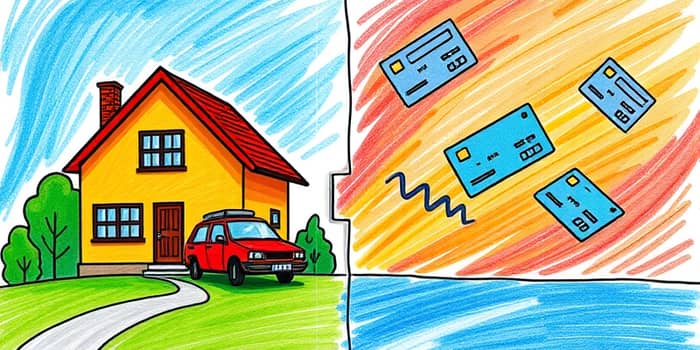
Deciding between a secured or unsecured loan can shape your financial future in profound ways. Understanding how each option works is essential to choose the path that aligns with your goals and risk tolerance.
Understanding Secured and Unsecured Loans
Secured loans require collateral pledges, meaning you back your borrowing with an asset such as a home, car, or savings deposit. This safeguard lowers the lender’s risk and often unlocks more favorable terms.
In contrast, unsecured loans rely solely on creditworthiness. Approval hinges on your credit score, income stability, and debt-to-income ratio. Without collateral, lenders take on greater risk, typically charging higher interest rates to compensate.
Common Loan Types and Examples
- Mortgage (home loan)
- Auto loan
- Home equity line of credit (HELOC)
- Secured personal loans
- Secured credit cards
- Personal loans
- Student loans
- Credit card debt
- Overdrafts
- Medical loans
How Secured Loans Work
When you apply for a secured loan, you pledge an asset whose value often determines your borrowing limit. Lenders typically conduct an appraisal, then calculate the maximum amount they are willing to extend against that collateral.
If you default, the lender has the legal right to seize the pledged asset to recover losses. While this mechanism reduces default risk for lenders, it places a tangible burden on borrowers who must safeguard that asset’s value.
How Unsecured Loans Work
Unsecured loans eliminate the need for collateral but shift the risk entirely onto lenders. Approval depends on your credit history, stable income, and debt ratios. Strong financial credentials can secure attractive terms, but missed payments can trigger severe credit consequences.
In default cases, the lender’s recourse is limited to collections, legal action, and reporting delinquencies to credit bureaus. Without collateral, they cannot repossess property, but your credit profile suffers immediate harm.
Interest Rates, Amounts, and Terms
Secured loans often offer lower interest rates—sometimes several percentage points below unsecured equivalents—because collateral covers lender risk. Borrowing limits can stretch into hundreds of thousands for mortgages or HELOCs, with repayment terms spanning decades.
Unsecured loans usually feature rates between 6% and 36% APR, depending on creditworthiness. Loan sizes typically range from a few thousand dollars up to fifty thousand for top-tier applicants, with repayment periods generally under seven years.
Weighing the Pros and Cons
Secured options grant higher borrowing amounts available, easier approval for those rebuilding credit, and more competitive rates. However, the risk of losing your asset in case of nonpayment and the need for appraisals or documentation can extend processing times.
Unsecured loans deliver quick access to funds and eliminate the threat of direct asset loss. Their application processes are streamlined, but they impose higher interest costs and stricter credit requirements, limiting available loan sizes for many borrowers.
Risk Scenarios and Real-World Impact
A secured loan default can lead to repossession or foreclosure, followed by a damaged credit score and reduced financial options. On the other hand, defaulting on an unsecured loan triggers collections, late fees, legal judgments, and an impact on your credit report that may take years to repair.
Borrowers must weigh their comfort with these potential outcomes. While secured loans anchor costs to tangible assets, unsecured options shift all penalties onto future borrowing power.
Choosing the Right Option for You
Your decision should reflect your asset base, credit health, loan amount needs, and risk appetite. If you own valuable collateral and seek long-term financing, a secured loan might be ideal. Conversely, if you have strong credit and need smaller sums quickly, an unsecured loan could be more convenient.
Reflect on whether you can comfortably repay without jeopardizing your home, vehicle, or savings. Align your choice with your broader financial strategy to ensure long-term stability and growth.
Tips for Making the Best Decision
Start by comparing offers from multiple lenders to evaluate rates, fees, and terms. Use online calculators to project monthly payments and total borrowing costs. Read all loan documents carefully, paying close attention to prepayment penalties and variable rates.
Consider consulting a financial advisor or credit counselor, especially if you’re unsure which path best suits your situation. Careful planning and informed choices can help you leverage debt as a tool rather than a burden.
Summary Table
Final Thoughts
Choosing between secured and unsecured loans is a critical decision that influences both your immediate financial flexibility and long-term stability. By understanding the nuances of collateral, interest rates, and risk scenarios, you can select the option that serves your goals and safeguards your assets.
Empower yourself with knowledge, compare your options diligently, and make choices that pave the way toward financial success and peace of mind.
References
- https://www.afbank.com/article/comparing-secured-loans-vs-unsecured-loans
- https://www.td.com/us/en/personal-banking/learning/unsecured-vs-secured-loan
- https://www.pnc.com/insights/personal-finance/borrow/secured-vs-unsecured-loans.html
- https://www.nerdwallet.com/personal-loans/learn/secured-vs-unsecured-loans
- https://www.bradford-law.com/secured-v-unsecured-debt/
- https://www.discover.com/personal-loans/resources/learn-about-personal-loans/secured-and-unsecured-loans/