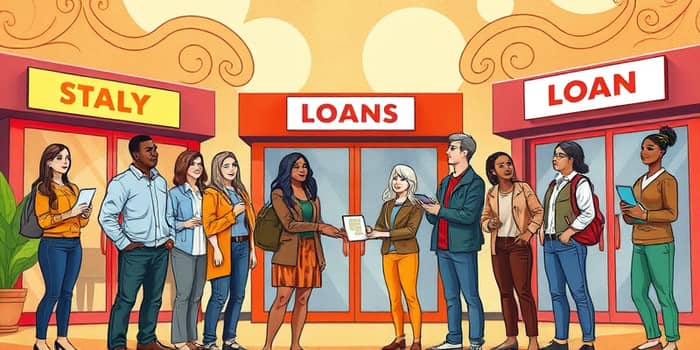
In an era where traditional financing often feels out of reach for budding entrepreneurs, microloans have become a powerful alternative. These small-scale loans under $15,000 and rarely exceeding $50,000 are designed to give a timely injection of capital to those who need it most. Across the United States, the average microloan stands at about $13,000, but it's the flexibility and accessibility that truly set this financial tool apart.
Microloans are more than mere monetary supplements—they are a catalyst that can turn ideas into thriving enterprises. By focusing on the potential of the borrower rather than solely on credit history, microloans have reshaped the way communities approach business growth.
The Financing Gap Facing Entrepreneurs
Recent data reveal a stark challenge: large banks approved only around 13.5% of small business loan applications in early 2025, down from pre-pandemic levels above 28%. Nearly 45% of applicants faced denial, with minority-owned and women-owned businesses experiencing even lower approval rates. For instance, Black-owned firms were 18% more likely to be denied, while women-owned businesses received loans averaging $67,035 compared to $80,140 for men.
These statistics illustrate a critical shortfall in the traditional lending system. Entrepreneurs without an extensive credit history or significant collateral often find themselves excluded. Here, microloans serve as a beacon of hope, bridging the gap between ambition and achievable growth.
Mechanics of Microloans
Microloan programs are offered by a diverse range of providers, including community lenders, credit unions, specialized microfinance institutions (MFIs), and government agencies like the SBA. A key feature is their flexible repayment terms and minimal collateral requirements, tailored to the realities of small operations.
Lenders evaluate applicants on character, community ties, and business potential rather than pure credit metrics. Approval can take days rather than weeks, ensuring entrepreneurs can act swiftly during critical moments.
Microloans typically fall into several categories:
- Start-up microloans: Seed funding for new ventures lacking collateral.
- Working capital microloans: Funding for daily operations, payroll, and short-term expenses.
- Inventory microloans: Purchasing stock and supplies to meet market demand.
- Expansion microloans: Financing growth initiatives like new locations or product lines.
Transformative Impact on Communities
Beyond individual businesses, microloans play a vital role in fostering local development. By directing capital to underserved or low-income areas, these loans stimulate economic activity, create jobs, and build more resilient communities. In developing regions, group lending models have empowered millions of self-employed individuals to escape poverty.
In the United States, women, minorities, and immigrant entrepreneurs have particularly benefited. Access to a microloan often comes paired with business training and mentoring services, providing borrowers with the knowledge and support to succeed long term.
The results are compelling. Microfinance institutions report a global loan repayment rate of 96%, and default rates remain comparatively low at around 1.3%. These outcomes underscore the effectiveness of microloans as a financial inclusion tool for all entrepreneurs.
Advantages and Limitations
Like any financial instrument, microloans have both strengths and weaknesses. Understanding these factors can help entrepreneurs make informed decisions.
Key advantages include:
- Accessible capital for borrowers with limited credit or business history.
- Character-based underwriting that values potential over past records.
- Fast approval times, often measured in days.
- Opportunities to build a credit history for future financing.
- Support services such as training, mentoring, and networking.
However, entrepreneurs should also consider the limitations:
- Loan size restrictions may not meet large-scale capital needs.
- Finding a suitable microloan provider can require extensive research.
- Interest rates vary widely and may be higher than traditional bank loans.
- Risk of default remains a concern for both borrowers and lenders.
Innovations and Future Outlook
Technological advances are reshaping the microfinance landscape. Data analytics, artificial intelligence, and digital platforms streamline application processes, improve risk assessment, and expand reach. Fintech startups are partnering with community organizations to deliver microloans via mobile apps, making access even more seamless.
Regulatory frameworks are evolving to protect borrowers and ensure transparency, while allowing providers to innovate responsibly. Forecasts project the global micro-lending market to reach $541.02 billion by 2034, driven by an expected annual growth rate near 9.8%.
As policy makers, lenders, and communities collaborate, microloans are poised to become an even more integral part of the financial ecosystem, offering small boosts that can yield substantial returns.
Stories of Ambition and Resilience
Consider the story of Maria, an immigrant baker in a small Midwestern town. Traditional banks viewed her as high-risk, but a microloan of $10,000 allowed her to purchase equipment and ingredients. Within months, her bakery became a local favorite, and she repaid the loan ahead of schedule, securing a larger line of credit for future expansion.
In another example, a cooperative of artisans in a developing nation used a group microloan to buy raw materials and rent workspace. Their shared responsibility model not only reduced risk for the lender but fostered mutual accountability. Today, the cooperative exports goods to several countries, lifting entire families above the poverty line.
These narratives highlight how small amounts of funding, when paired with guidance and community support, can transform lives and drive sustainable growth.
Conclusion: A Catalyst for Growth
Microloans embody the idea that sometimes, a modest investment can ignite big ambitions. By providing flexible, accessible capital, this form of lending addresses critical gaps left by traditional finance. It supports innovators who might otherwise be overlooked, empowering them to pursue dreams, create jobs, and strengthen communities.
As the microfinance sector continues to evolve, driven by technology and enlightened regulation, its impact will only deepen. For entrepreneurs poised on the edge of growth, microloans offer more than money—they offer a partnership in success.
References
- https://www.shopify.com/blog/what-are-microloans
- https://coinlaw.io/business-loan-statistics/
- https://ramp.com/blog/what-is-microlending
- https://www.creditsuite.com/blog/small-business-lending-statistics-and-trends/
- https://poonawallafincorp.com/blogs/personal-loan/what-is-micro-loan
- https://fitsmallbusiness.com/microfinance-statistics/
- https://www.credibly.com/guides/microloans/
- https://www.federalreserve.gov/publications/2025-march-consumer-community-context.htm
- https://www.nav.com/blog/69-understanding-the-basics-microloans-vs-traditional-loans-5393/
- https://scoop.market.us/microfinance-statistics/
- https://www.sofi.com/learn/content/microloans/
- https://electroiq.com/stats/microfinance-statistics/
- https://www.sba.gov/funding-programs/loans/microloans
- https://www.sba.gov/document/report-small-business-administration-loan-program-performance
- https://www.indeed.com/career-advice/finding-a-job/what-is-microfinance
- https://www.precedenceresearch.com/micro-lending-market
- https://www.archivemarketresearch.com/reports/microloans-53113
- https://m2pfintech.com/blog/everything-you-need-to-know-about-microfinance-lending-in-2025/