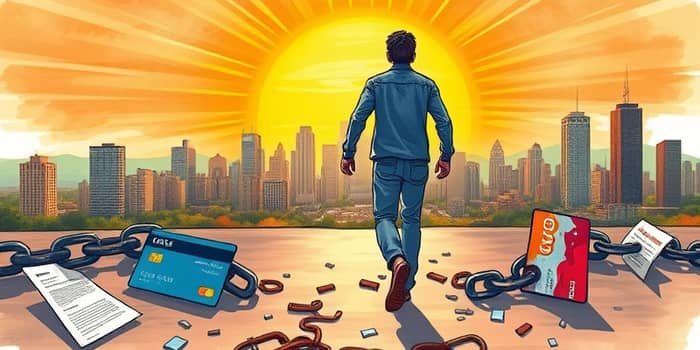
Debt can feel like a shadow that follows every paycheck, decision, and dream. This guide offers you a path to break free and reclaim your financial destiny.
The Scale and Impact of Debt in America
As of mid-2025, Americans carry a staggering total consumer debt of $18.33 trillion, up 3.2% year-over-year. Mortgages remain the largest component, with an average balance of $258,214 per borrower, rising 3.1% from 2024.
Auto loans average $24,596, and credit card balances stand at $6,735 per household. Even home equity lines of credit tick upward at 9.0%, averaging $48,298. These numbers translate to widespread financial strain for millions of families.
Beyond the dollar figures, debt exerts a psychological toll. Studies link ongoing loan obligations to heightened anxiety, disrupted sleep patterns, and strained relationships, showing that money worries often become mental burdens as well.
How Debt Accumulates Unseen
Debt doesn’t always arrive in a single explosion—it often creeps in through routine expenses. Rising home prices push buyers to stretch their budgets. Education and healthcare costs continue to outpace wage growth, requiring many to borrow more aggressively.
Regionally, the average American debt ranges from $63,000 in West Virginia to $155,000 in Colorado, illustrating how local economies and cost-of-living differences affect borrowing patterns. Younger generations, notably Gen Z, have seen the sharpest increases, fueled by fair-credit borrowers and inflating tuition.
Proven Strategies to Eliminate Debt
Escaping debt demands both a plan and persistence. Below are powerful, research-backed methods that can help you conquer balances and restore control.
- Avalanche Method: Target the debts with the highest interest rates first to minimize total interest paid.
- Snowball Method: Pay off the smallest balances first to build momentum and motivation.
- Pay More Than the Minimum: Allocate extra payment toward principal to reduce the total repayment period.
- Debt Consolidation: Combine multiple debts into a single loan, often at a lower interest rate, for simplified payments.
- Negotiation with Creditors: If you maintain a solid payment history, many lenders will reduce interest rates or waive fees.
- Maintain an Emergency Fund: A reserve reduces the need to borrow during unforeseen hardships.
- Charge only what you can pay off in full each month.
- Keep credit utilization below 20% on every card.
- Automate all minimum payments to avoid late fees and credit score damage.
- Review and update your budget monthly to accommodate life changes.
Building a Bulletproof Financial Foundation
Avoiding future debt hinges on cultivating habits that support long-term security and flexibility. These steps help you stay on track.
- Spend within your means and track every expense, monthly and annually.
- Maintain an emergency fund covering 3–6 months of essential costs.
- Prioritize saving at least 10% of your income before discretionary spending.
- Regularly revisit financial goals to celebrate wins and realign your strategy.
Key Numbers at a Glance
The Broader Economic Context of Debt
The US national debt soared to $37.64 trillion by September 2025, accounting for 122.6% of GDP—up $2.2 trillion in just one year. Federal interest rates hovered around 4.5% until a modest 0.25 point cut in September, making borrowing slightly cheaper but not eliminating the cost burden.
When personal and public debts escalate in tandem, interest rate adjustments ripple through mortgages, auto loans, and credit cards, influencing affordability across all income levels. This interplay underscores why managing household debt is as critical as monitoring national fiscal health.
Preventing Future Debt: A Roadmap
Establishing financial resilience means embracing consistent practices that guard against backsliding into old patterns. Treat each paycheck as an opportunity to reinforce your safety net.
Consider using secured credit cards for small purchases, paying them off immediately to build credit without accumulating new balances. Leverage free credit-report monitoring tools and stay informed about any changes to your score.
The Freedom Beyond Loans
Imagine waking up with no looming monthly payments and a growing balance in your savings account. Financial freedom translates to more energy for passions, stronger relationships, and less stress.
Without debt eating into your budget, you gain the flexibility to invest in new ventures, travel, or retire early. You become immune to many economic shocks, from job loss to unexpected medical bills.
Your journey from indebtedness to independence can serve as a beacon for those around you. Sharing your story may inspire friends and family to adopt healthier money habits, creating a ripple effect of empowerment.
Debt may be a central part of modern life, but it doesn’t have to define your future. By implementing these strategies, nurturing disciplined habits, and staying informed about economic shifts, you can demystify debt and build a life truly free of loans.
References
- https://www.jec.senate.gov/public/index.cfm/republicans/2025/10/fy2025-debt-increased-by-2-2-trillion-stands-at-over-37-6-trillion
- https://www.amerantbank.com/ofinterest/debt-management-strategies-for-financial-freedom-2025/
- https://www.experian.com/blogs/ask-experian/research/consumer-debt-study/
- https://www.navyfederal.org/makingcents/credit-debt/debt-repayment-strategies.html
- https://abcnews.go.com/Business/americans-household-debt-hits-new-record-high-report/story?id=127221208
- https://www.ameriprise.com/financial-goals-priorities/personal-finance/effective-debt-management
- https://www.newyorkfed.org/microeconomics/hhdc
- https://dfpi.ca.gov/news/insights/three-steps-to-managing-and-getting-out-of-debt/
- https://www.lendingtree.com/credit-cards/study/credit-card-debt-statistics/
- https://www.cookman.edu/aid/literacy/personal-finance-and-debt-management.html
- https://usafacts.org/answers/how-much-debt-does-the-us-have/country/united-states/
- https://www.tiaa.org/public/learn/personal-finance-101/debt-consolidation
- https://educationdata.org/student-loan-debt-statistics
- https://www.wellsfargo.com/goals-credit/smarter-credit/manage-your-debt/tips-for-managing-debt/
- https://www.stlouisfed.org/on-the-economy/2025/may/broad-continuing-rise-delinquent-us-credit-card-debt-revisited
- https://consumer.ftc.gov/articles/how-get-out-debt
- https://www.equifax.com/personal/education/debt-management/articles/-/learn/paying-off-debt-strategies/